Cold Arbor Update 6: More Drivetrain and the Saw Actuator

Hey, where the heck did January go? There’s only a week left!

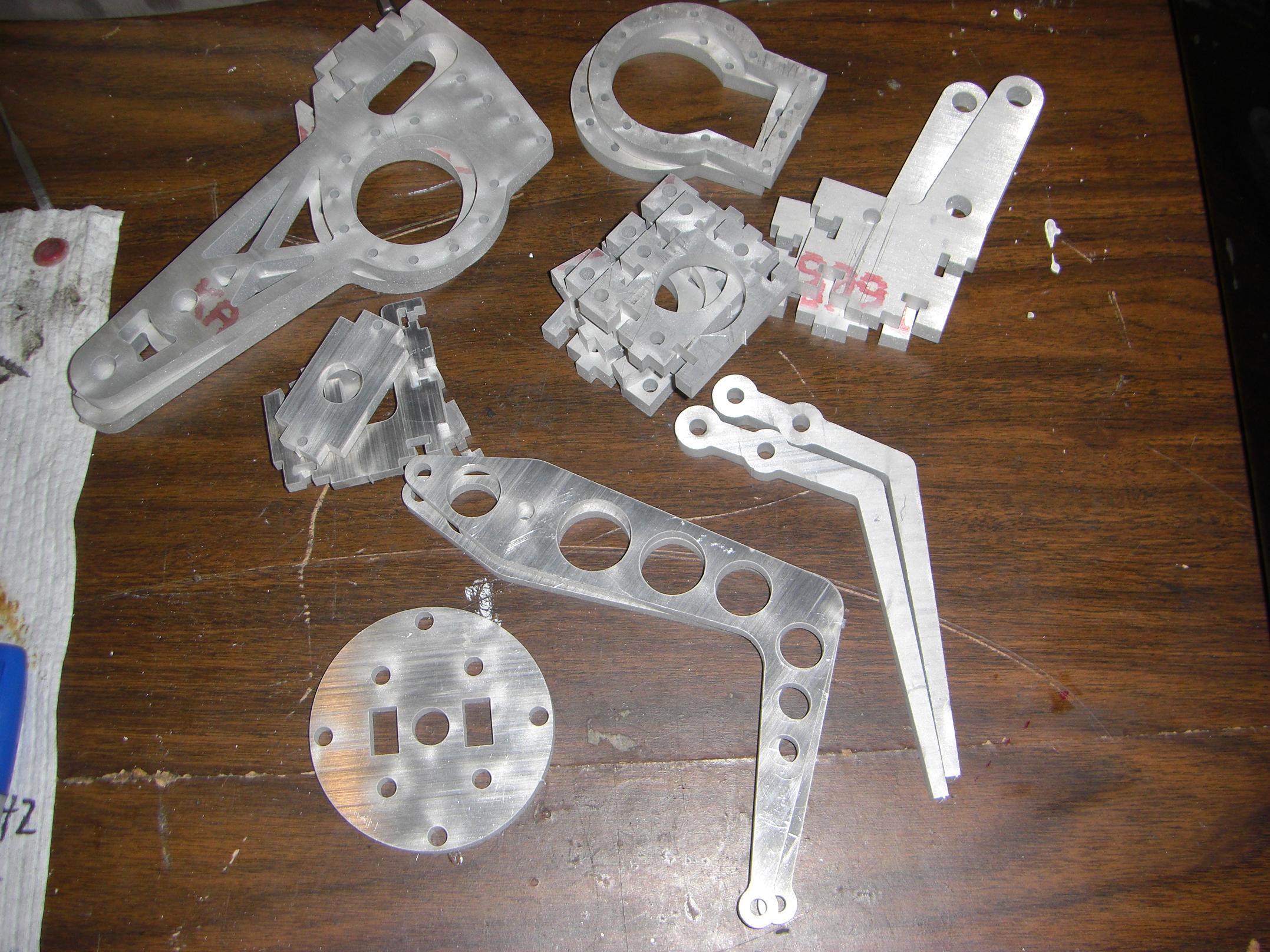
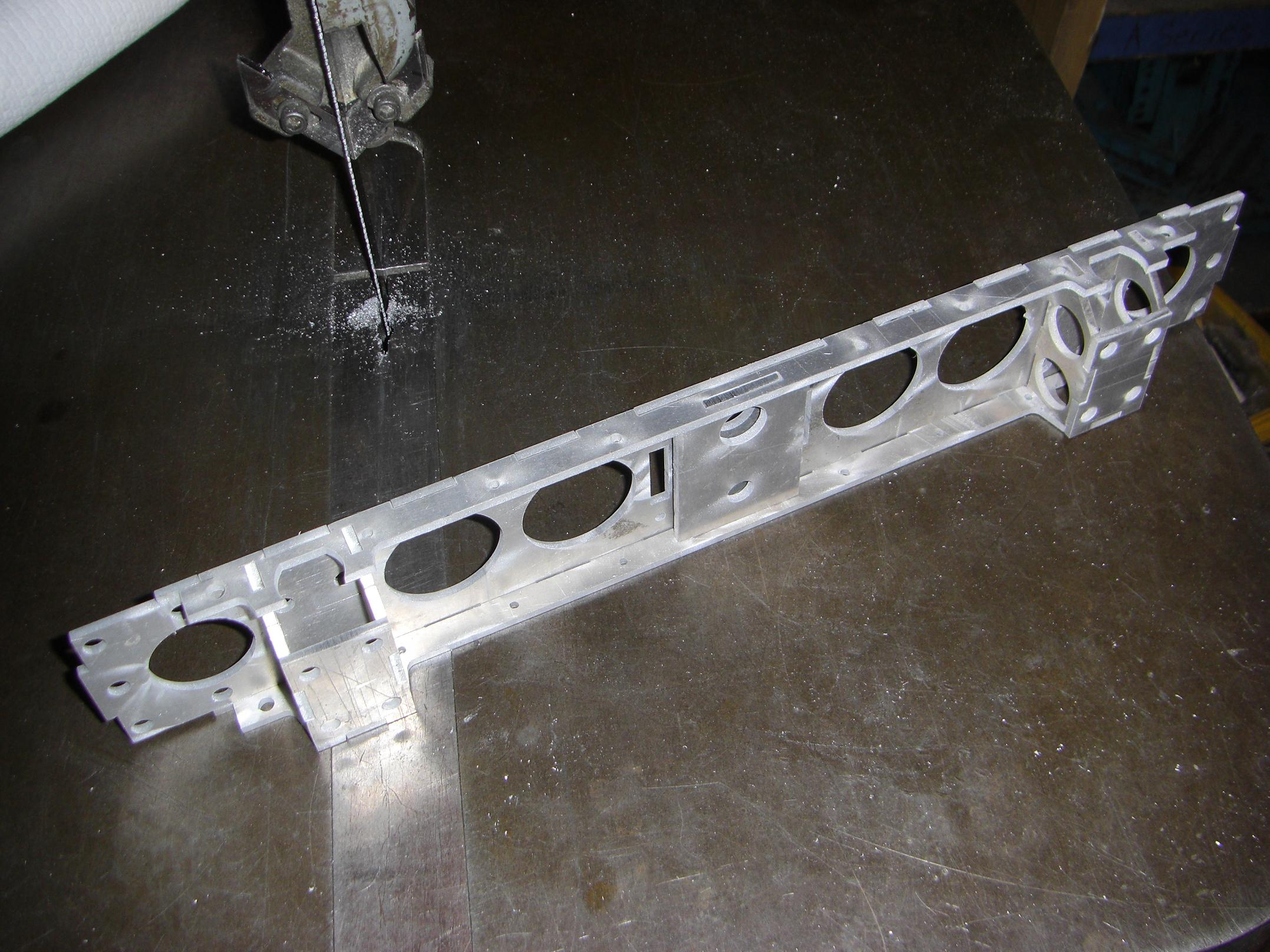
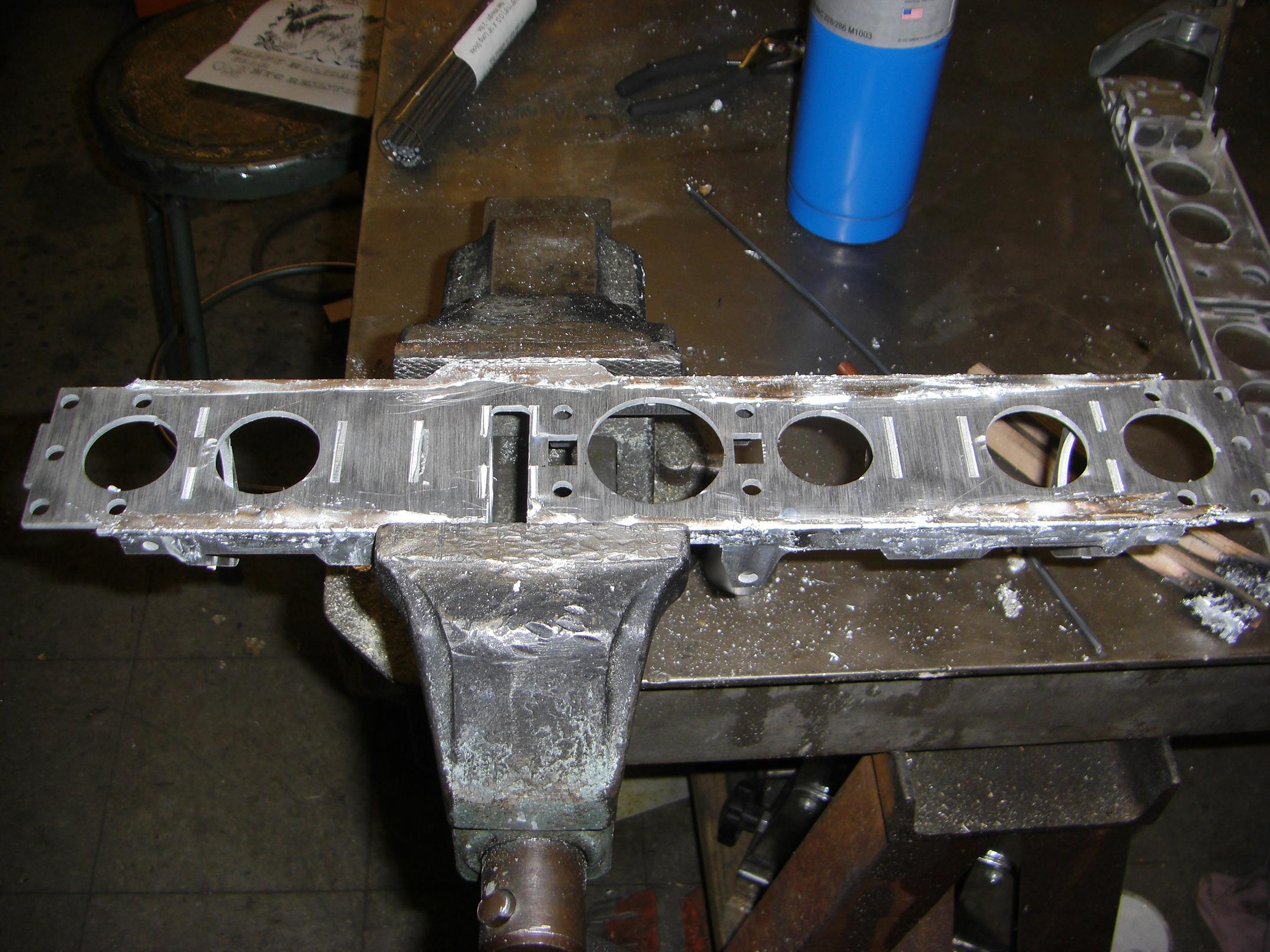
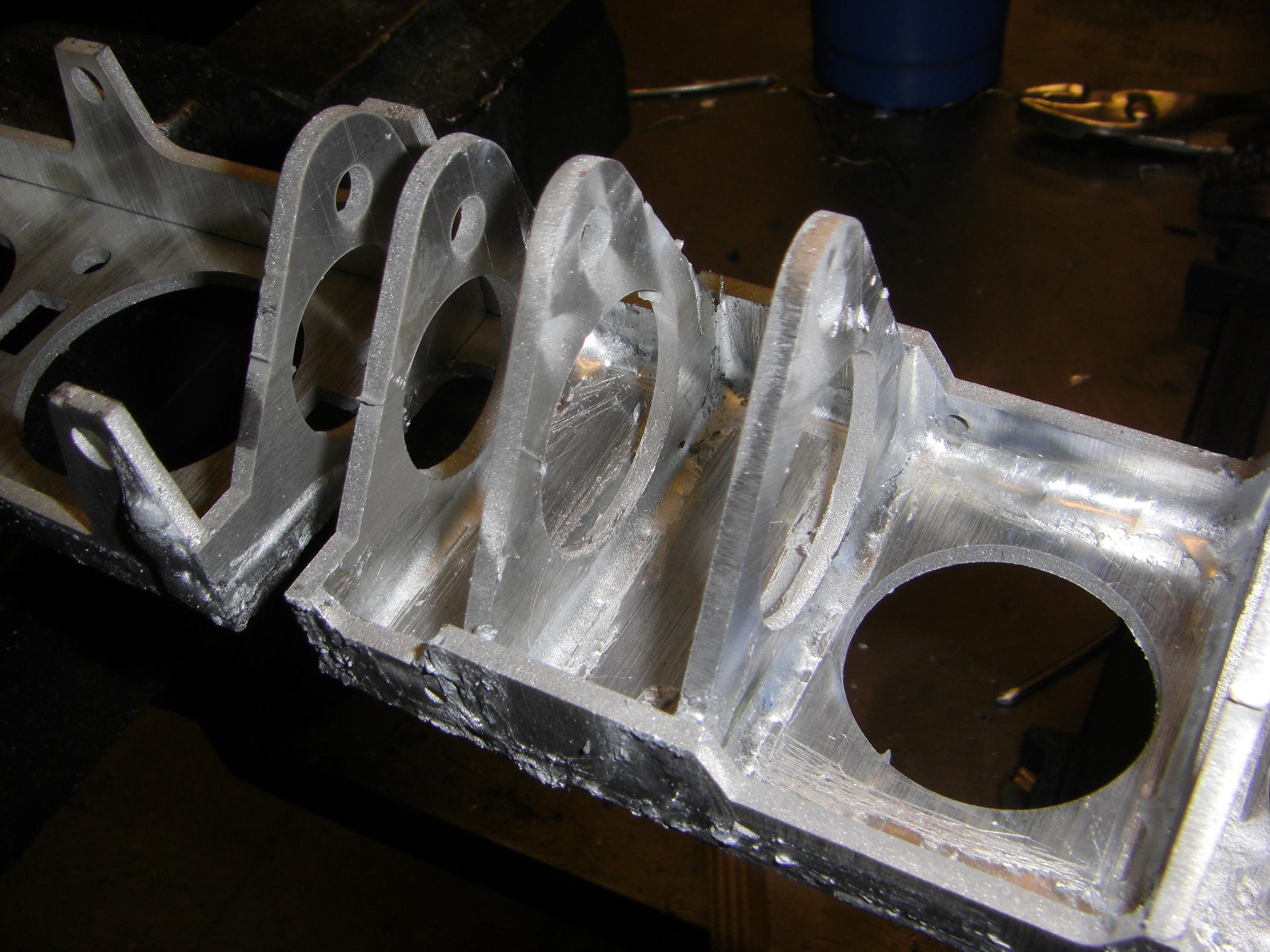
That means there’s only 3 weeks left until Motorama 2010. Time to pump up the volume on Arbor work. While awaiting more waterjetting time, I finished most of the more complex machined parts for the robot.

I’ve grown into the habit of making my own linear actuators for the robots. Acme nuts and threaded rod are cheap on the surplus market, and I can tune the characteristics of the actuator to suit. I prefer linear actuators and linkages for moving robot assemblies around over direct torque couplings on the end of a gearbox, because it’s a bit easier to make a part strong in tension or compression rather than shear, and the leadscrew isolates the actuator motor from torque shock. Überclocker features a prominent exception to this because the clamp arm needs almost 150 degrees of travel, which is much more difficult to accomplish with a linkage and linear actuators.

Anyway, the saw arm of the robot only needs to travel about 60 degrees, which a single 3 link planar linkage can easily do. A clear image of the actuator is visible in this early design rendering of Arbor. It’s essentially a scaled up version of Clocker’s top clamp arm actuator – a leadscrew nut trapped between two thrust bearings.

To make the actuator body, I needed two big chunks of 2″ x 2.5″ rectangular aluminum bar. I had the bar, but both bandsaws at MITERS were simultaneously down.

Well that sucks. People need to stop accidentally cutting hardened steel on them or something.

The time of day I usually work on these things coincides with absolutely nothing else open on campus that houses a machine tool capable of cutting metals. So, I had to create a hackaround…

Bridgeport lovers and shop instructors avert thine eyes.

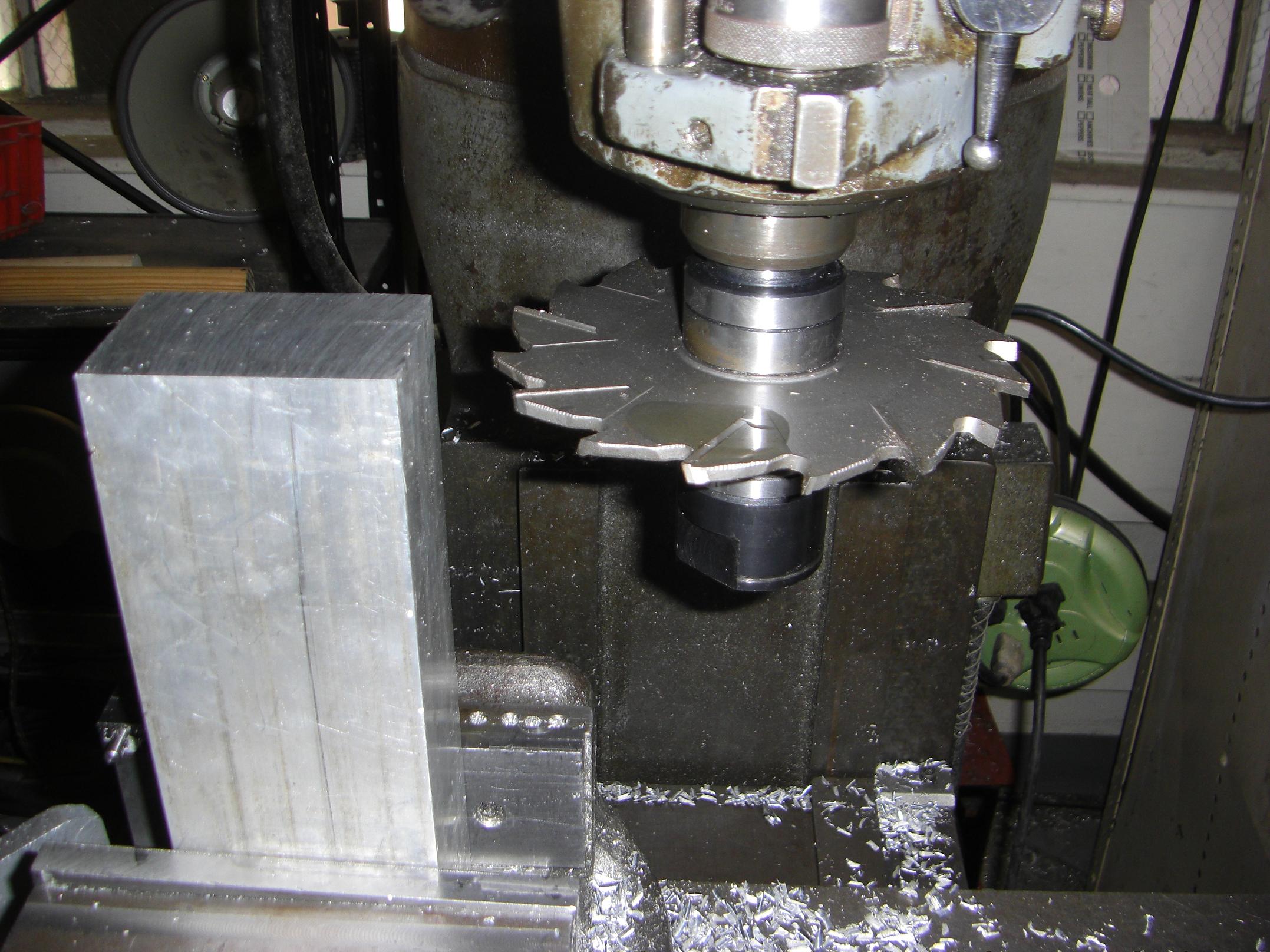
Wow, what the hell is that?

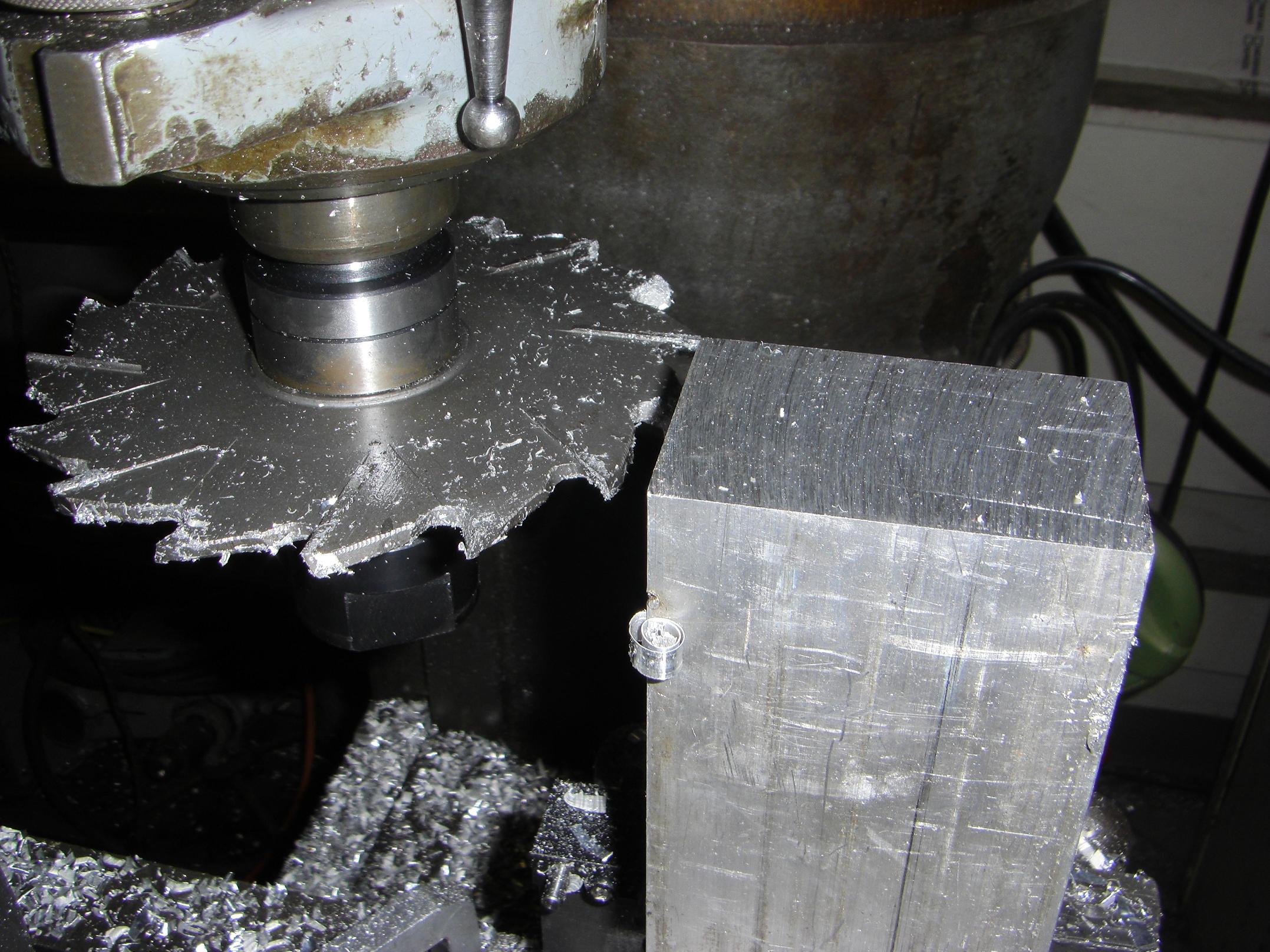
It’s a 6 inch milling cutter (with R8 arbor!) that a fellow MITERer picked up to cut a bunch of deep slits in steel. So, I’m not fundamentally doing anything worse, but it’s still one of those exercises that has the potential to destroy property and cause personal injury.

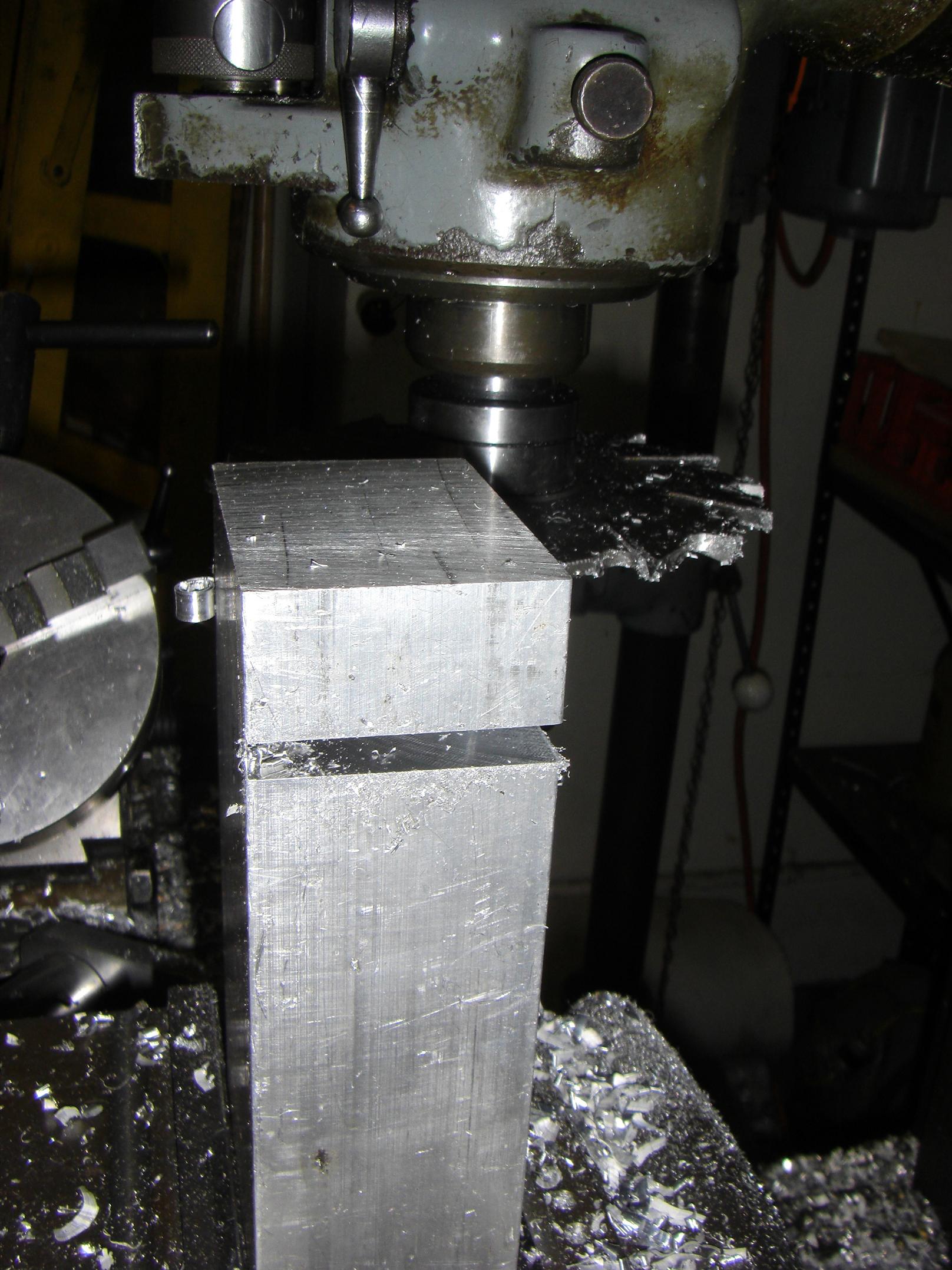
So, with the machine in low gear, a constant stream of Tap Magic, and everything cranked down as tight as I could manage, I plowed the cutter through just under 2 inches of aluminum leaving a roughly .02″ thick edge uncut. This was done mostly to keep the block from being pitched through a window as soon as it fell off the saw.  The whole process took a minute, and…

…left a brilliantly clean finish, almost fly-cutter-like in appearance. To remove the block, I just ripped it off with some vise grips.

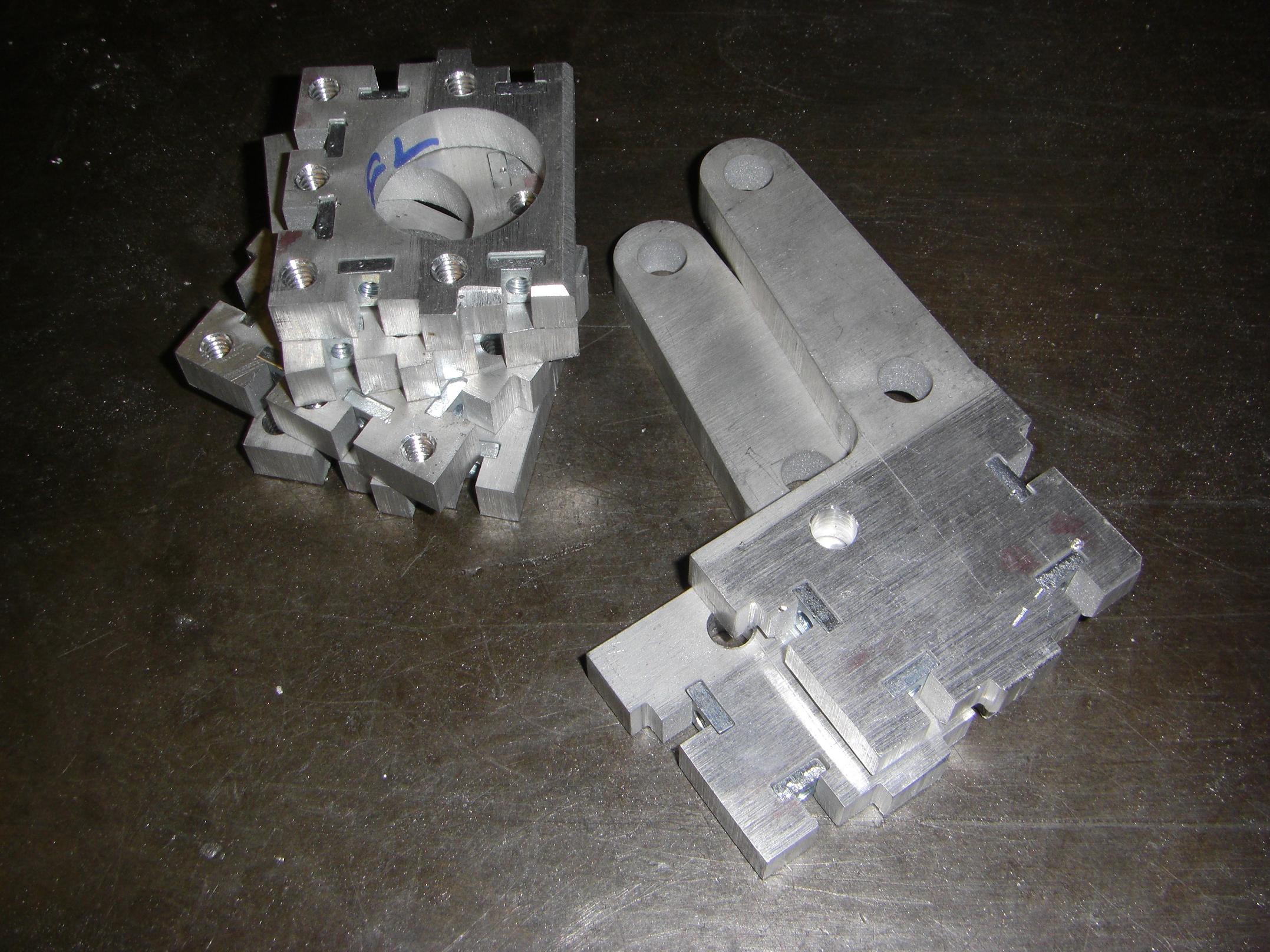
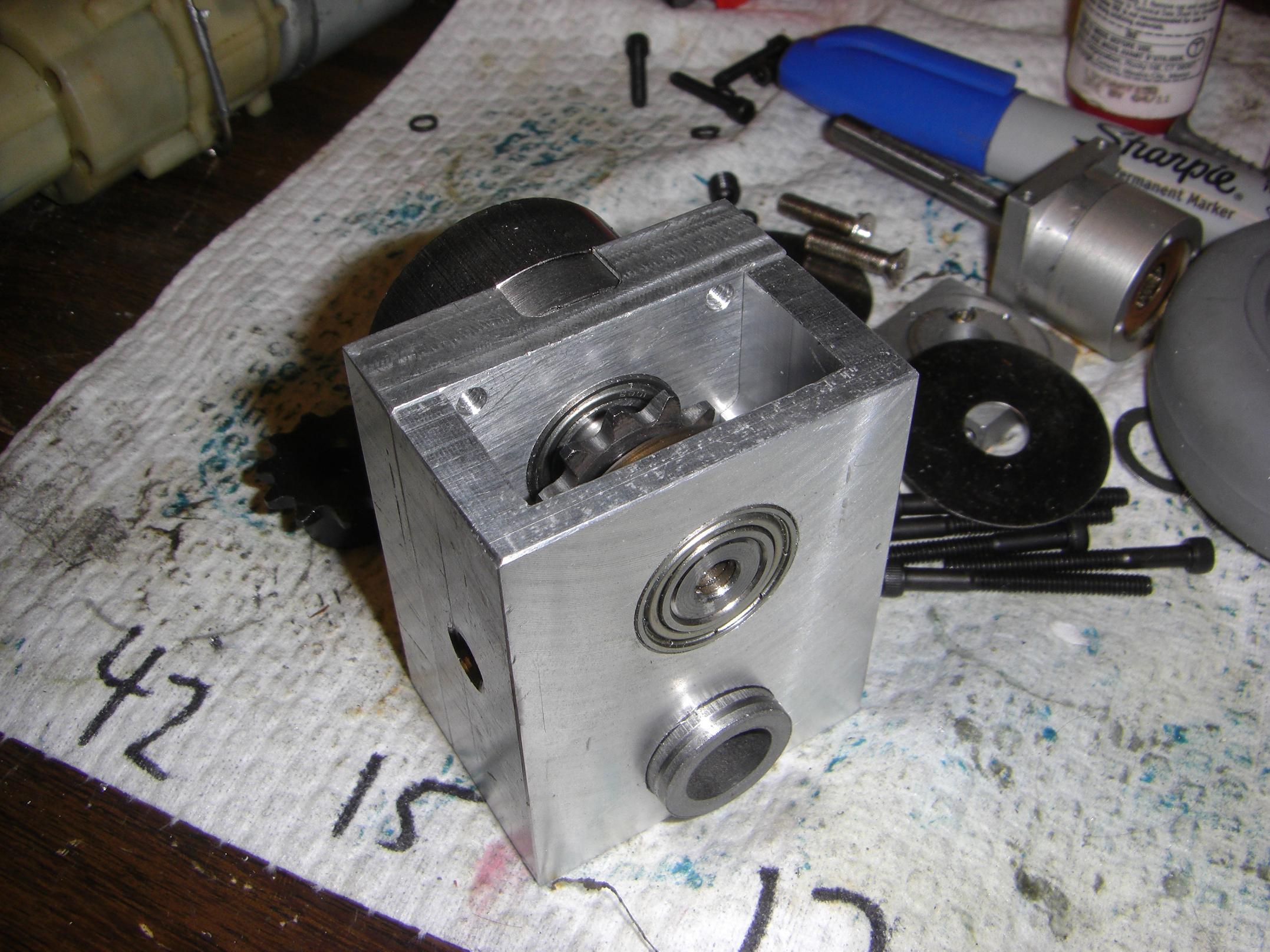
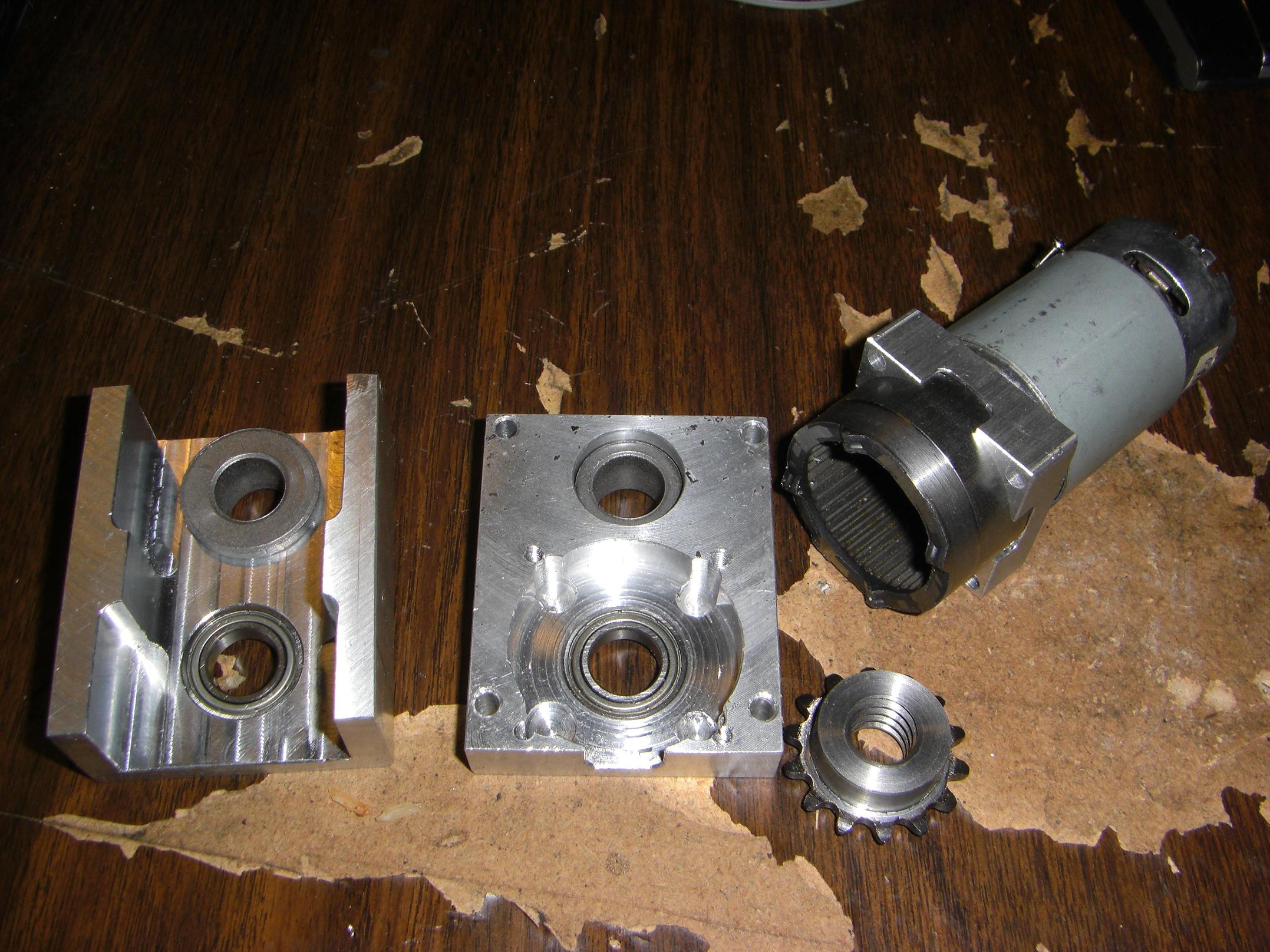
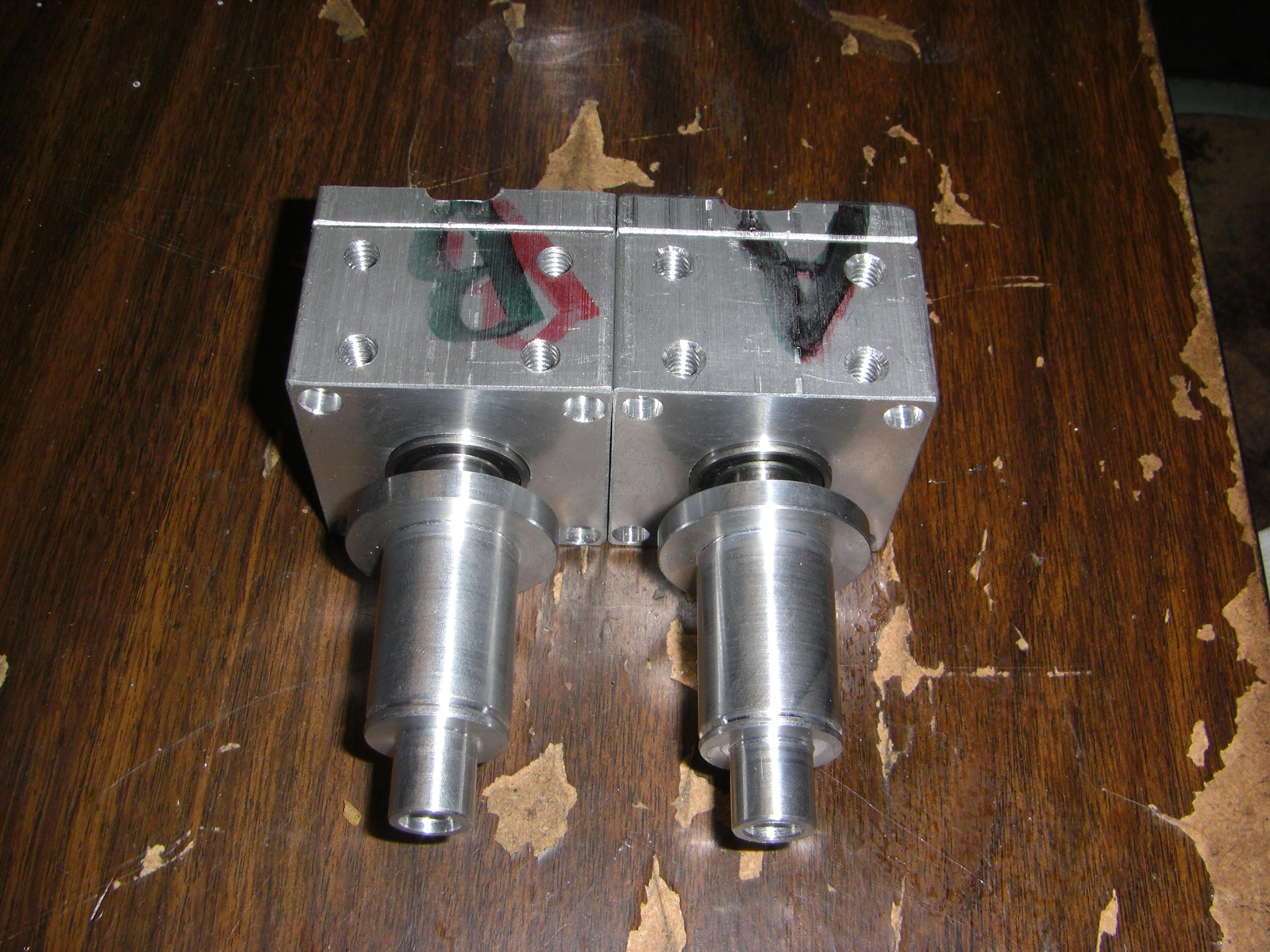
Alright, so that was the fun part. Here’s a leap of faith and some finished actuator housings. No other special machining hacks were involved in the making of these parts.

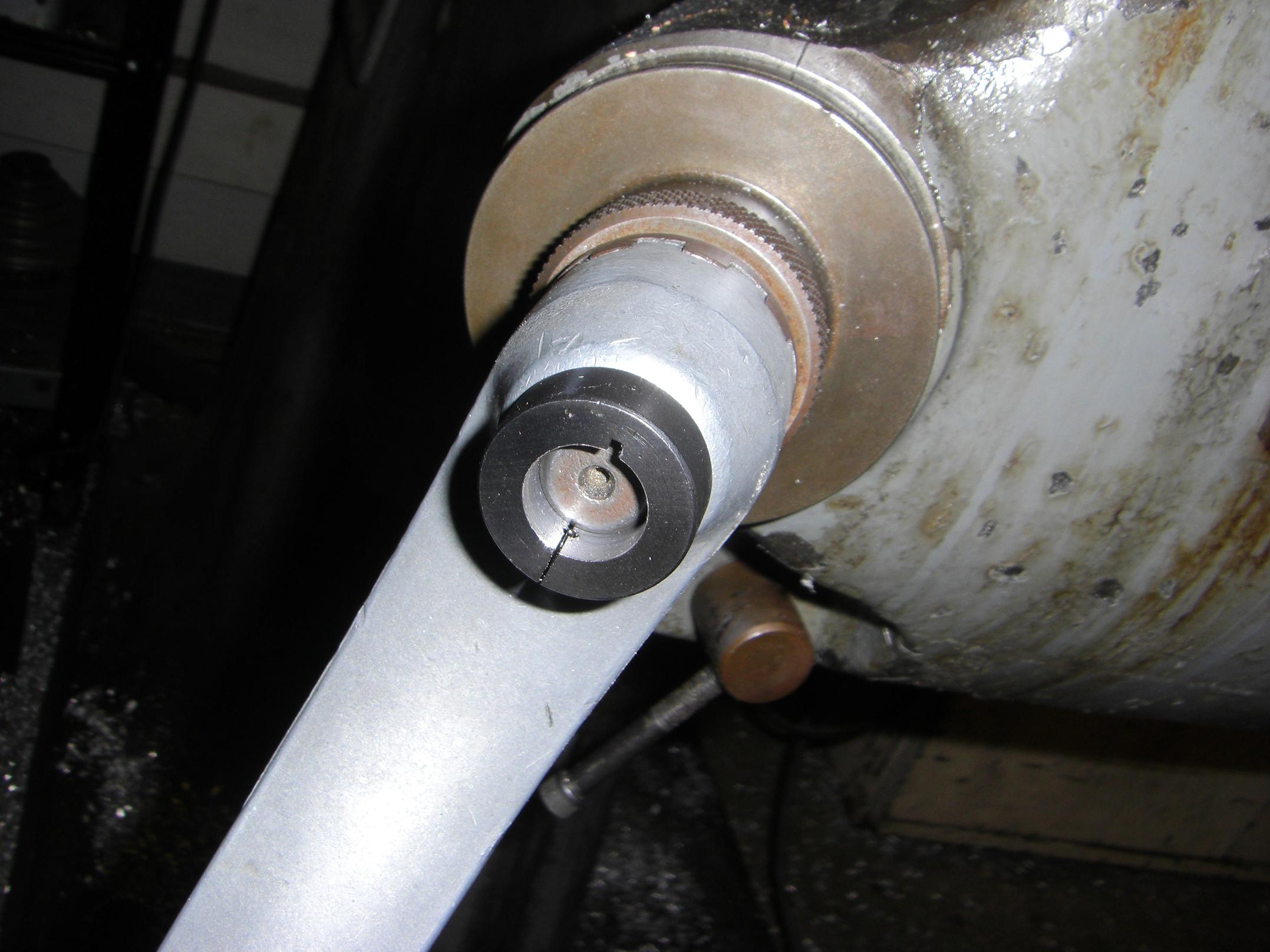
Well, maybe one. Bridgeports have a Z-axis knee handle that can detach from the machine and be stored elsewhere. This is so you don’t accidentally run into it and get OSHA on your case, or move the Z-axis setting. Unfortunately, they have a bad habit of detaching themselves from their drive splines, especially when you’re trying to crank the Z as hard as you can. This has resulted in me clocking myself with the cast aluminum handle in the forehead at least once.

After having the handle fly off too many times, I finally got pissed off enough and put a shaft collar on the handle shaft so the stupid thing doesn’t come off. Ever. I don’t care if Bridgeport made them this way for a reason.

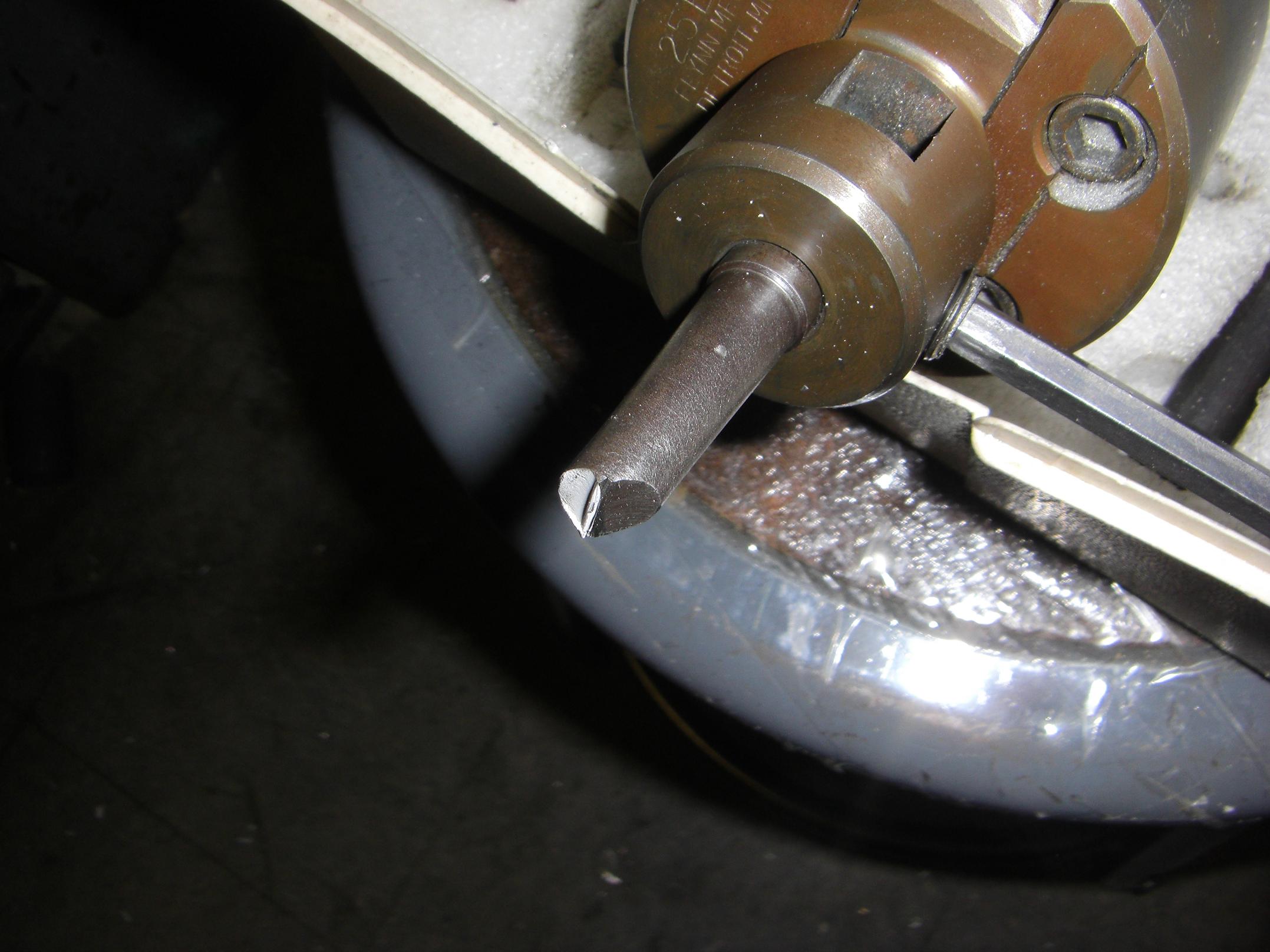
The first tool casualty in a long time comes in the form of me dropping a fully loaded boring head after finishing one of the actuator halves. It landed on the point of the tool, and so the entire tip of the boring bar cracked off.

Sad face. Time to start checking Ebay again?!

Fortunately, I was about to continue with a spare.

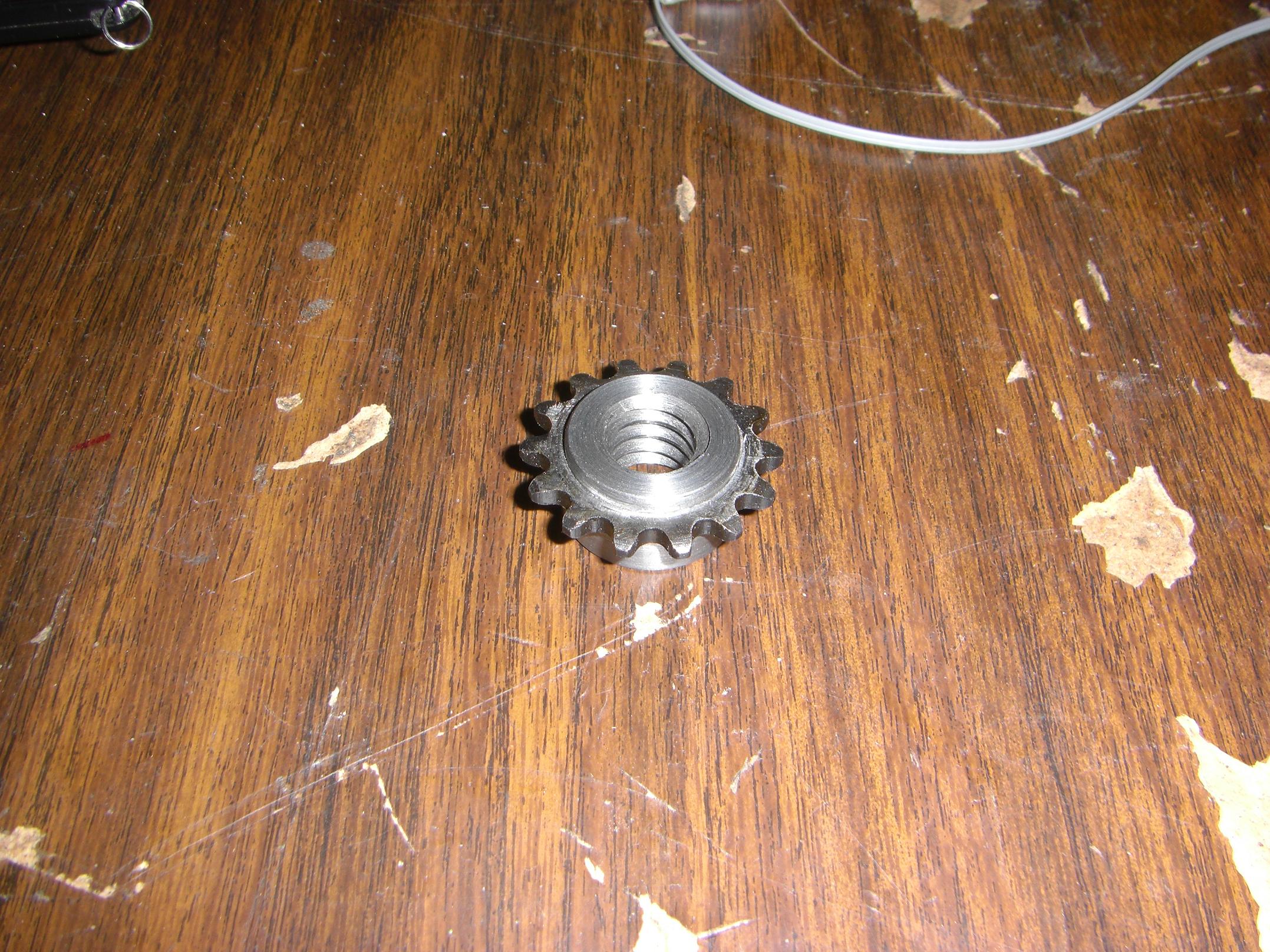
There’s something weird about the output gear in this actuator. It’s not a gear. It’s actually a #25 sprocket!

I found out that surplus chain and sprockets can literally be an order of magnitude cheaper than using spur gears. You can’t seem to find industrial 24 or 20 pitch metal spur gears for under $20 to $25 a pop. I was going to have to pay out almost $90 in spur gears alone for the two actuators in the robot.

But short runs of chain can perform the same duties. Surplus Center’s chain and sprocket selection was just too cheap to not explore these options. So, I decided to make the motor-to-leadscrew connection using chain instead. Enough sprockets and chain to build both actuators ran just under $11.

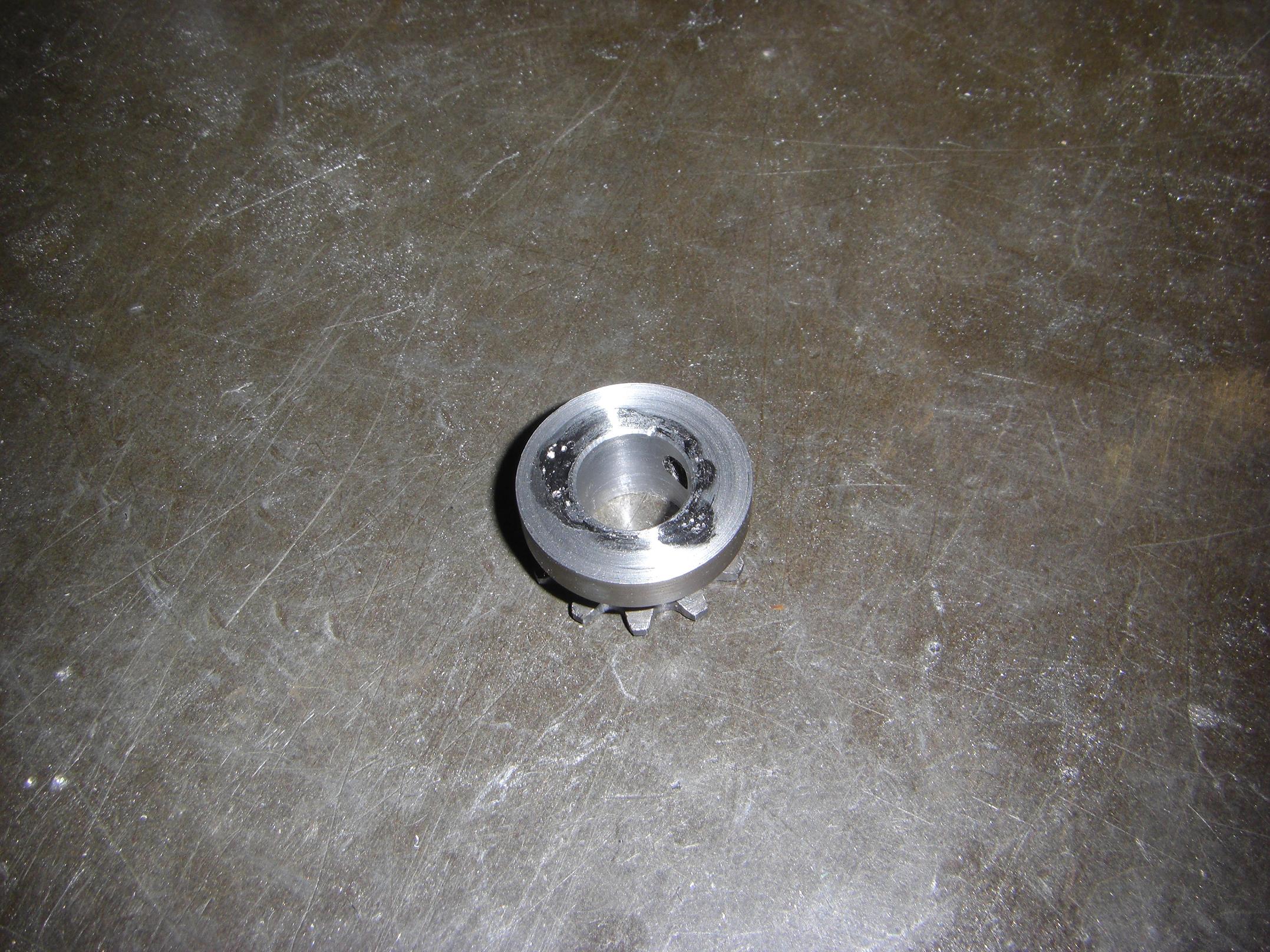
The 14 tooth sprocket shown here is squeeze-fitted onto a 1/2″-10 Acme nut, which, incidentally, is also Surplus Center hardware.There will be an 11 tooth sprocket mounted on the drill motor output shaft.

I heart Surplus Center.

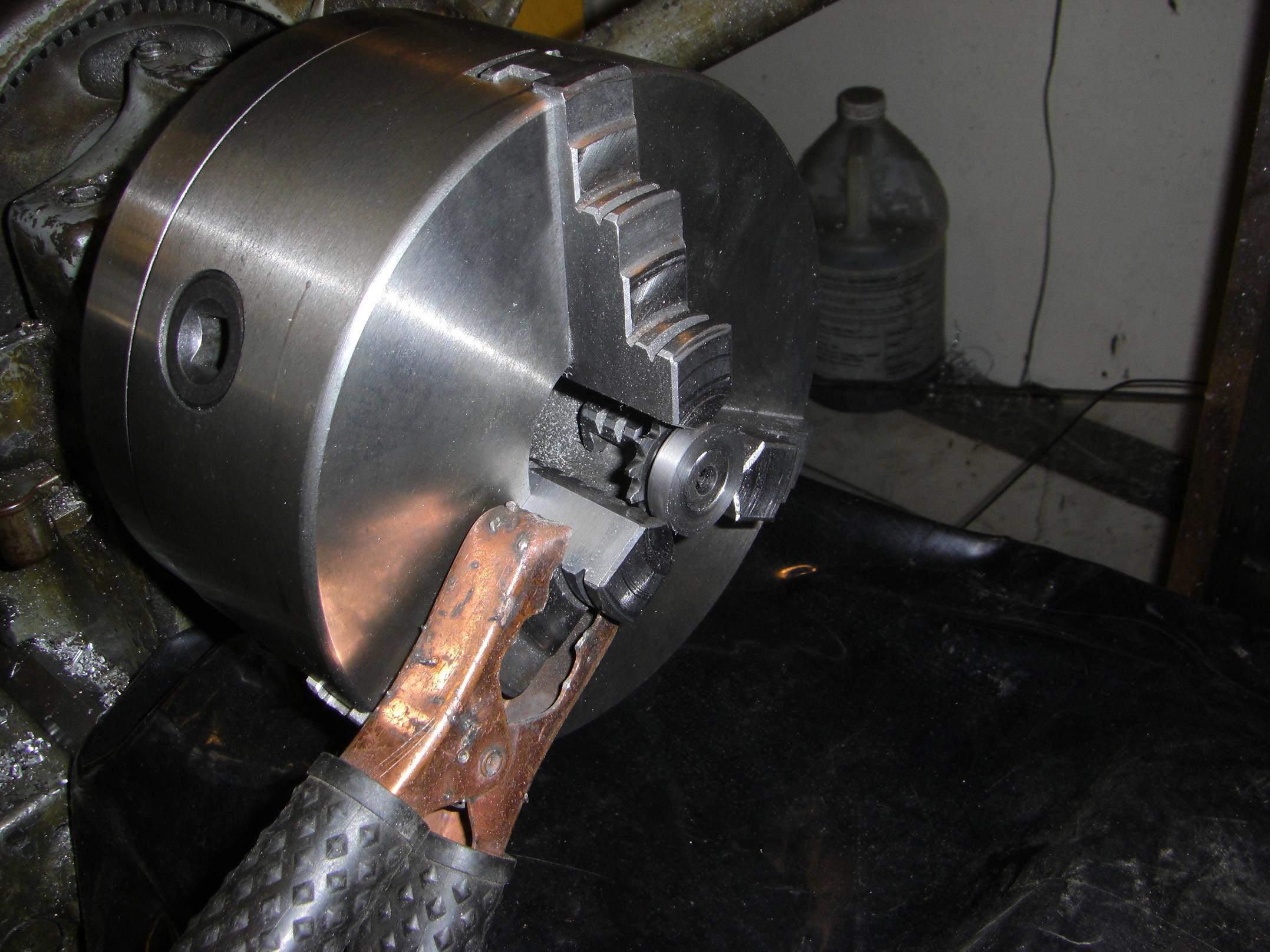
The sprocket was actually once an independent power transmission component. To remove the “sprocket” part, I bored it to death on the the Old Mercedes. One cut at the diameter of the hub, and the outer ring with the teeth just pops off and lands on the tool.

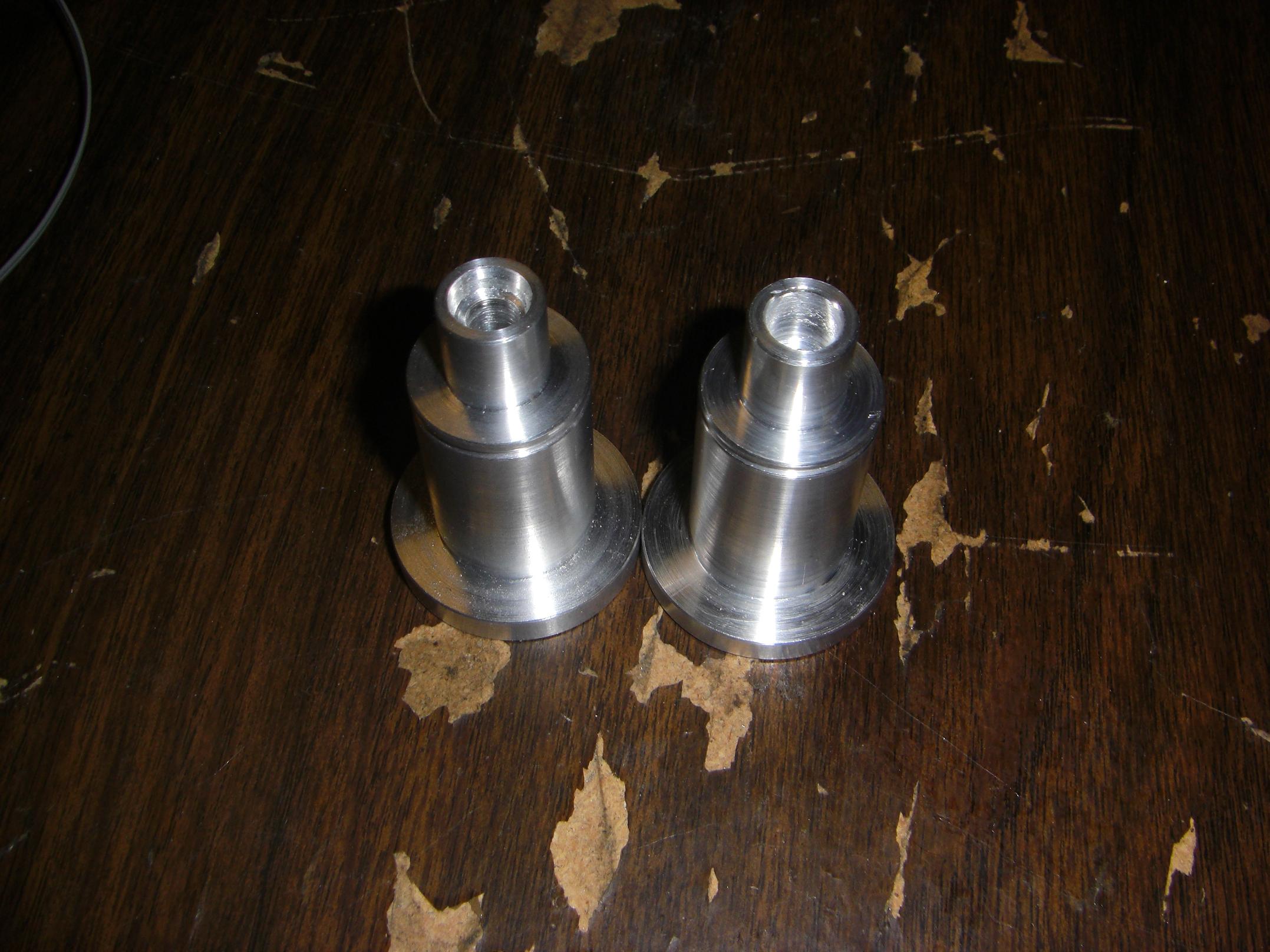
While I had the machines still set up, I popped off these protoforms of the rear drive hubs. The flanges will have a 3 point bolt circle drilled into them later, and two flats will be machined near the retaining ring groove in order to make room for custom D-bore sprockets, just like on Überclocker.

Mounted on their respective gearboxen. The smallnubs will fit into bronze bushings in the side of the robot.

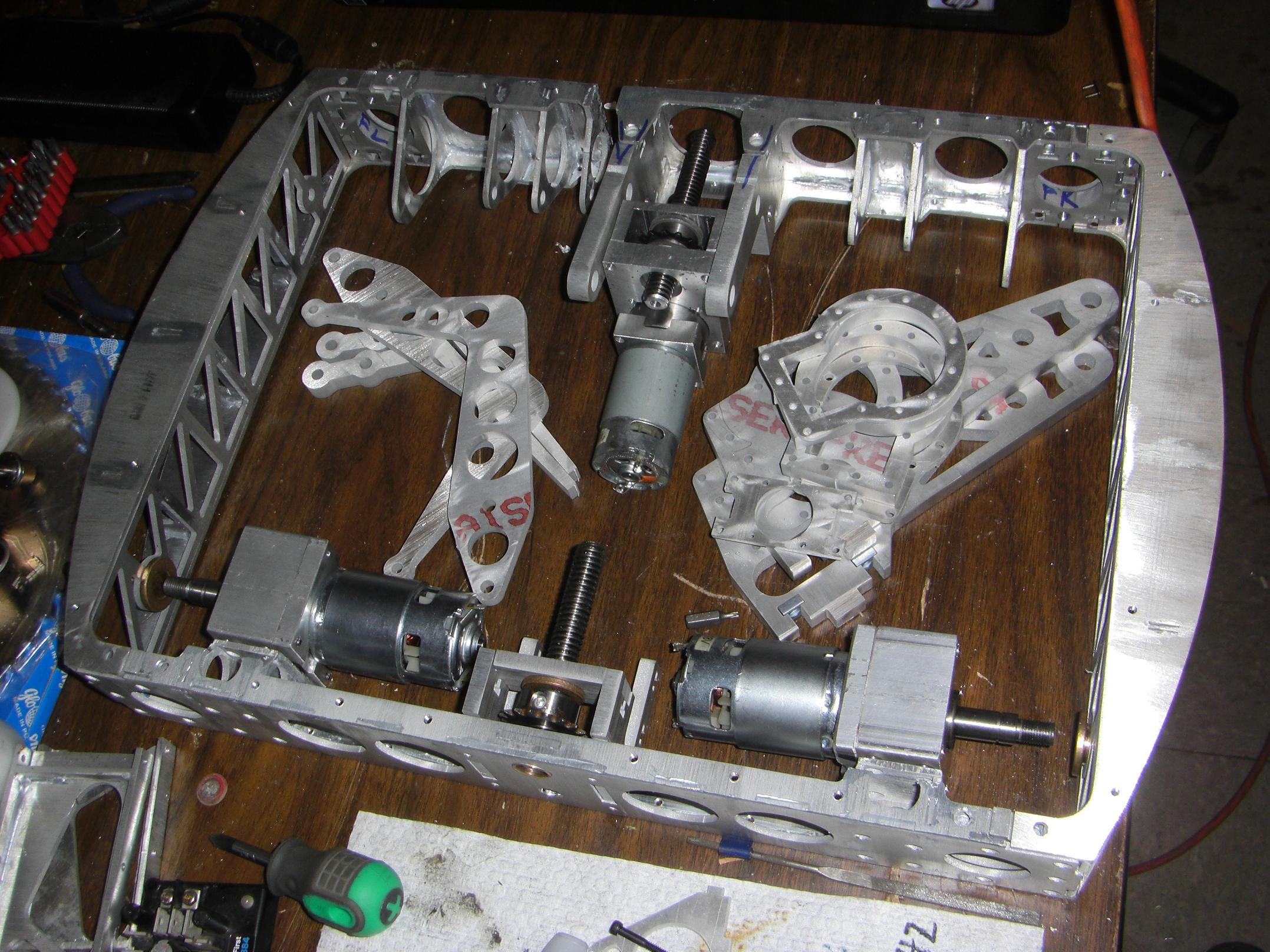
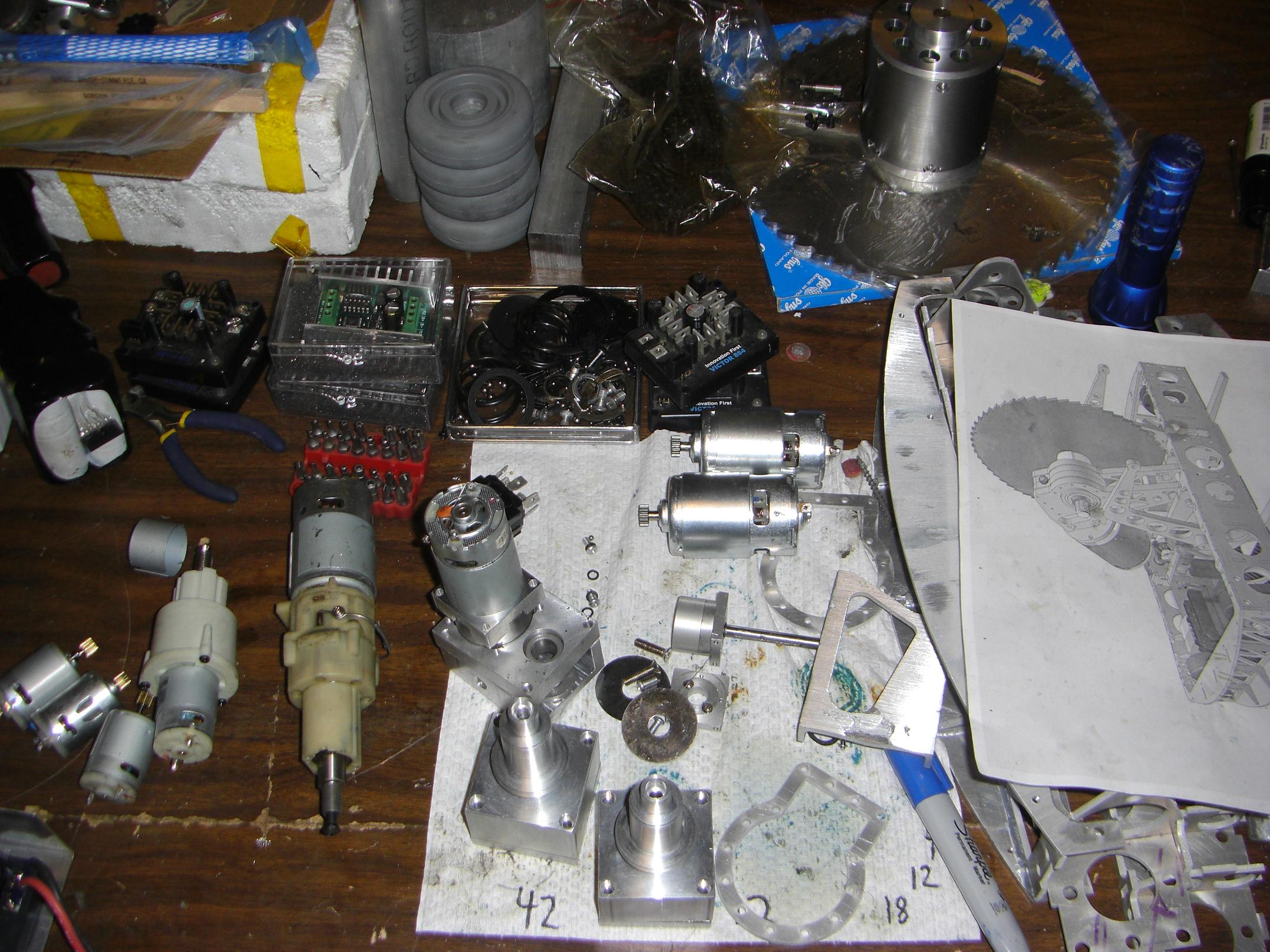
The Scene™ as of yesterday. Lots of things “almost, kind of, sort of” done, but not really.

Time to go catch up on waterjetting so I can continue building…

Cold Arbor Update 5: Pretend-o-Bot 1

In the last episode, our heroes were…

… wait, wrong show. Anyways, I said I’d decide between TIG welding and using zincaluminum brazing alloy on the frame. I’ve decided to go out on the proverbial limb and put together the entire robot frame using said brazing alloy, due to the fact that getting the MITERS TIG unit up and running in a timely fashion is now impractical.

While other TIG welders exist on campus, I also don’t feel like fucking up someone elses’ machine trying to weld aluminum, something which I have only done on accident with large batteries, and only once with a TIG torch. That was more making a molten puddle of metal than anything else.

I want to investigate how legitimate the alloys are. They’re usually advertised as STRONGER THAN MILD STEEL!!!! or STRONGER THAN THE PARENT METAL!!!! which smell of marketing hype. In other words, if Cold Arbor holds together in the arena, or only falls apart under extraordinary circumstances, then I’ll probably be buying alot more of the stuff.

Alright, here’s Real Production Part #1!

I forgot to take a “before” picture, but imagine the piece with bulging, ugly round corners where I applied the alloy. Result: Not bad for the first shot. There are areas where I didn’t fill as much as I could, and an area where I parked the torch too long – oops.

Aluminum doesn’t change colors before it liquefies, unlike steel. Instead, the surface just becomes a bit darker. Then suddenly your metal starts sagging.

Mild color differences between the 6061 plates and the 95/5 Zn/Al alloy can be seen on the corners.

Another view. You can barely see where the tab-and-slot edges are any more, which is an indication of good fill. Before I applied the alloy, I sanded chamfers into all coincident edges such that each edge was a tiny V joint.

Here’s a shot of the inside edges. Inner corners are the most difficult to do properly, it seems, because you can’t get an abrasive brush into them. I only had “toothbrush” style stainless wire brushes – I’d need a “pencil” brush to get it right.

The brush is what breaks up the surface gunk on aluminum in lieu of a flux. The brazing products are all advertised as being fluxless.

In other words, you apply a large puddle to the workpiece then brush it around to wet the metal.

To hold these T-nutless assemblies together while I held them to the flames, I used center punch dimples to “flare” the tabs inside their slots by punching right on the seam.

This worked amazingly well. Almost to the point where I had a hard time taking the front frame rail assembly apart after discovering I put something in backwards.

Let’s try for something BIG, like the side rails. Click the midsize image to see my unparalleled metal joinery skills up close!

And try not to vomit. The front piece is absolutely horrifying. The problem with using a very temperature-dependent process is that your whole piece practically has to be at the working temperature of the alloy in order for it to flow. Armed with only a propane bottle torch, it was hard for me to keep the alloy molten over distances greater than 3 or 4 inches. By the time I finished one fillet, the other side of the piece has already cooled below 750°F.

Those middle two sections are probably great examples for “How NOT to use Durafix” videos. I could not get in there with a brush at all, so had to resort to prodding the surface with a (melting) rod of alloy, or using a piece of frayed stainless steel aircraft cable. Neither of which worked very well. Thus, the Epic Glob. Areas which I could access with the wire brush, such as the front and back “compartments”, especially on the second piece, were successes.

I am contemplating investing in a cheap toaster oven and modifying it to sustain high temperatures.

Alright, that’s enough for tonight. Both side rails and “intermediate framelets” are complete.

While the aluminum cooled off, I reverted back to working on the drivetrain.

Clockerb0xen cases! They are slightly modified versions of the gearboxes used in Überclocker. They are side mounted, not face mounted. Otherwise, the dimensions are the same – two inches square and about 1.5″ thick.

The stock was roughed out and circular features machine on the lathe, and the mounting holes finished off on the mill.

The nice thing about notebook computers is that they can travel anywhere. The not-so-nice thing about notebook computers is… well, they can travel anywhere.

I got lazy and didn’t print any paper drawings. Instead, I just pulled up the drawing files on the screen while the machine parked on the bandsaw. It’s far enough away from the mill that I’m confident my prized mobile computing implement won’t get showered by slivers of metal.

(Nobody turn the bandsaw on, please…)

Here’s whats inside the gearboxes.

Observe the protruding bearings. This is what happens when you forget that 6901 ball bearings are in fact 6mm wide, not 5. That’s a 6801. The net result is a little bit of bearing overflow – 2mm to be precise, since I used two bearings per gearbox.

A bonehead error but it does not affect the rest of the robot.

The pinions get shoved onto the 750-size drive motors.

I don’t have another set of 14.4 or 18 volt DeWalt motors kicking around, unfortunately, and they’re a bit on the expensive side to actually buy new. I’ll see how far I get with these things.

While the Loctite set on the motors, I turned my attention to the wheels. I noticed McMaster had added some “super soft” rubber wheels to their selection, with a 40A durometer tread. They were cheap, so I snagged 4 for engineering samples.

These things really are soft. Substantially softer than Colsons, and grippy like nothing else I’ve seen. With luck, Arbor will have more pushing power than Clocker.

I had to bore out the axle hole to make the wheels compatible with the robot. This was kind of a hairy operation, because all you have to fixture to is gumball-stiff rubber.

…but it all worked out in the end. The polypropylene hub machines like dense air.

The culmination of all of the day’s effort is PRETEND-O-BOT #1!

Fine, so it’s still more of a pile of parts than anything else. To go: All the wheel hubs, some more missing frame pieces, the structure of the saw itself, all the mechanical parts of the saw, both linear actuators, and the clamp linkage.

And that’s just the mechanicals. One month.