Snuffles Reloaded: Update 3

After browsing and consulting with the folks on RCGroups more, I decided to (once again) modify the (supposedly) final design for the wheelmotor. The tweaks increase the virtual gearing inside the motor by about 20% and also makes winding much easier.

I have to lock myself into a design eventually, otherwise nothing will ever get built as I continually update little things here and there. Therefore, I took the opportunity of a gap in the work scheduling to hop on the Media Lab waterjet with some thin steel sheets and erode myself some new 30T stator plates.
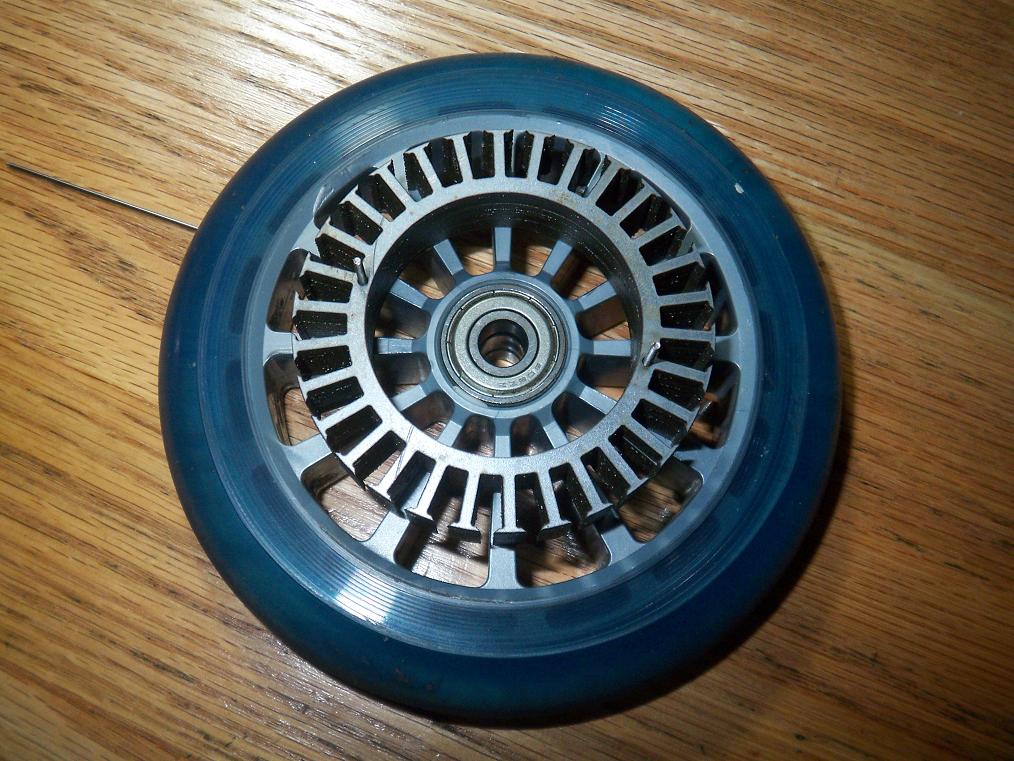
These thin steel formations are probably the most elegant things I have ever cut out of anything. The waterjet is officially my new favorite manufacturing implement.

With the change in number of stator poles comes a change in the required magnet dimensions. I emailed the people at Supermagnetman, my usual source for neo magnets, to see if they could assist me with manufacturing a set of custom magnet segments that will fill up the available magnet ring space 100% with no finicky spacing, trimming, or selective application of epoxy. We’ll see how that goes, but 40 5mm wide, 3mm thick magnets also fit well.

I split the 3D model for the “motor can” into three parts, from two. The left and right hub plates/bearing holders are now identical and symmetrical, so two could be popped off quickly on a CNC lathe. The magnet ring mount, which used to be integrated with one of side plates, is now its own structure. It is quite literally a ring.

Meanwhile, I have also been fiddling around with “internal logistics”. That is, how to squeeze all the necessary parts into a space about 40% of what I had to work with while building the first scooter. Here’s a picture of the new “conversion base”, a Razor A3 I ganked off EBay, as compared to Snuffles 1.
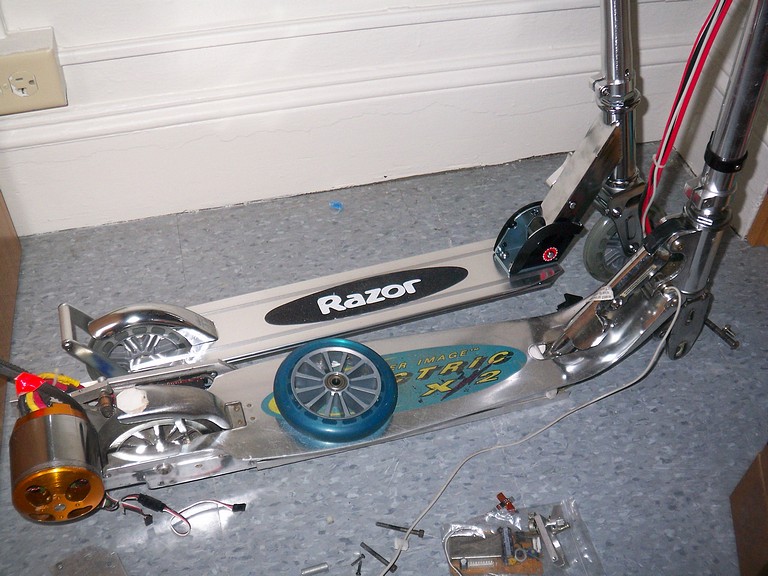
6061 > Shitluminum

The wheelbases are the same, but the aluminum extrusion that forms the chassis of the A3 is half the height of the same on Snuffles 1. This means no more shoving a stack of big NiCd cells – they’re simply too big.

The hope for this build lies in lithium polymer cells, of which 6 4AH cells fit just right in the back two-thirds of the channel such that enough space is left for the controller and wiring.

I’ll get to the juicy parts later.

The next mutant implement is…

Like most small, bushy-tailed rodents, I’m stocking up on things to prepare for the winter. Since I don’t intend to go outside frequently in liquid helium temperatures to go food gathering, I bought a Haier cube fridge at Best Buy as a provisions capacitor.

TB4.5 makes a great decorative piece.

Getting it back from said Best Buy on foot was an adventure by itself, but it could have been worse. What caught my eye as I was browsing the appliance section was the fact that it was thermoelectric – it doesn’t have a compressor or coolant, but uses Peltier coolers. As usual, a mass of ideas and thoughts emanated from my head and began congealing upon it. Since this was impolite to do in public, I went ahead and bought the unit. It also happened to be the least expensive.

Thermoelectric refrigerators aren’t known to be high-performance units, nor particularly efficient (the average Peltier device is about 10% efficient thermally), and most are used as drink coolers and such. A noble use indeed, but I, in love with severely mutated and overpowered devices (think Snuffles), could have fun with it.

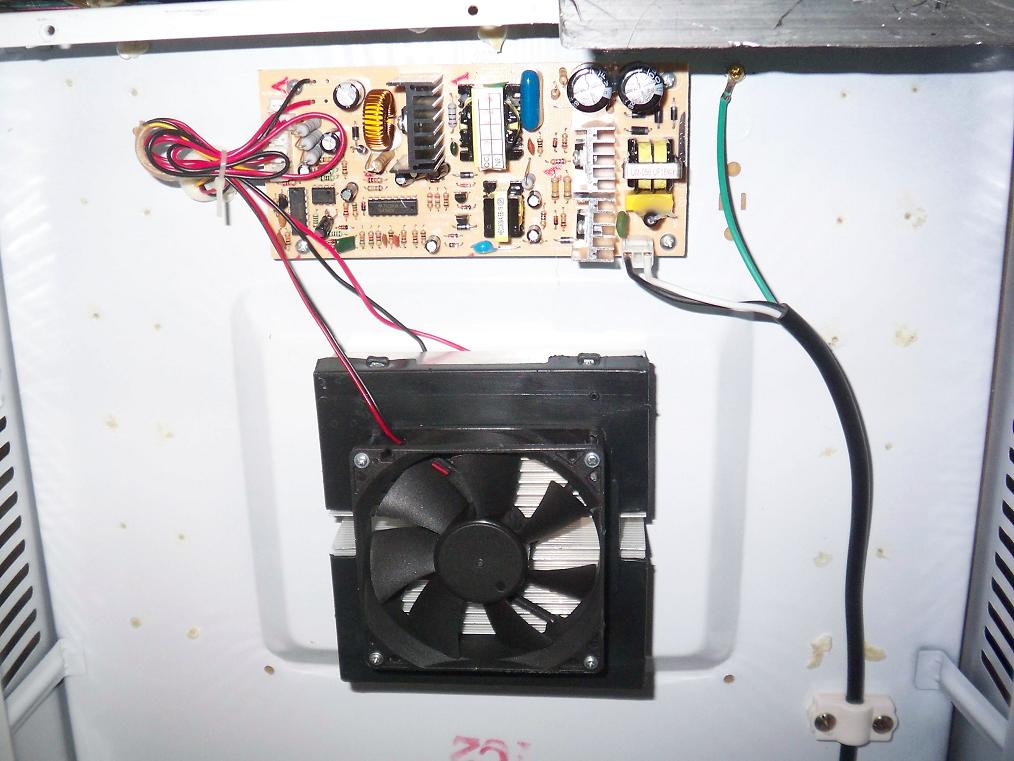
The first thing I did when I got back was take the back cover off. I must not be used to appliance construction techniques, but this thing is rickety beyond anything I’ve seen. The sheet metal forming the case was on the order of… mid-20s gauge?

The operating mechanics are… well, simple. An additional heatsink and fan on the inside of the cabinet act as the “coldsink” for the Peltier device.

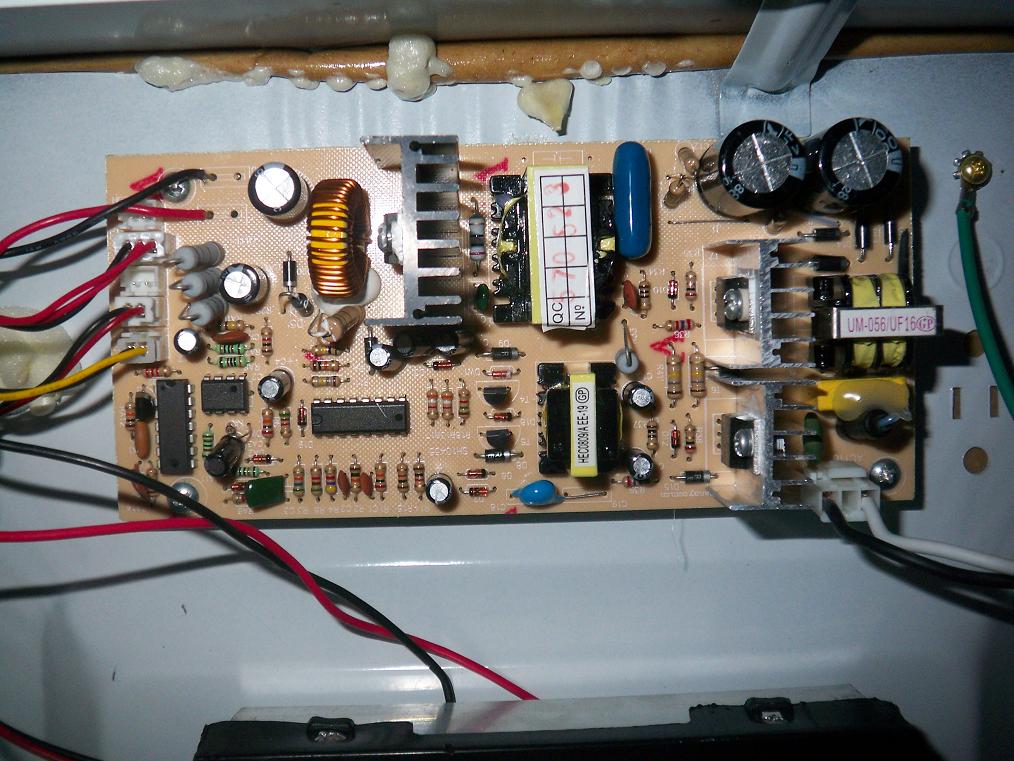
One board to control them all. On the right is a switch-mode power supply, and on the left the control electronics, which I assume throttle the fan and limit the Peltier device current according to needs (I haven’t taken the board out yet). Output on the fans and Peltier appear to be 12 volts.

Because of the control electronics, simple overvolting isn’t an option. Besides, that wouldn’t be completely above and beyond what the boundary of genius and insanity dictates.
The board also cannot be overdriven without mods – the power transistors get extremely hot as they are, and probably wouldn’t appreciate more loading. The fans seem to be mediocre and the heatsink fin area sparse.

Therefore, the inaugural project to adorn the new Future Projects page is the as-of-yet unnamed mutant minifridge. Don’t bother looking, as there’s nothing really worth looking at.